

Better Sleep with Less Back Pain: Practical Strategies that Actually Work

Back pain doesn’t just hurt during the day, it can also steal your sleep at night. For people managing chronic discomfort, the relationship between pain and rest often turns into a vicious cycle: pain disrupts sleep, and poor sleep amplifies pain perception. Fortunately, you can intervene in this cycle with practical adjustments that ease tension, align your spine, and create the conditions for truly restorative rest.
Key Takeaways
Your mattress and posture matter most. Aim for spinal neutrality — no sagging or twisting.
Gentle movement before bed can reduce muscle stiffness.
Body positioning is medicine: side sleepers, tuck a pillow between knees; back sleepers, under the knees.
Strength and stretch balance—strong core, flexible hips, and calm nerves—helps pain fade over time.
Mind-body and environmental tweaks (temperature, breathing, lighting) are underrated game-changers.
Why Back Pain Disrupts Sleep
When you lie down, inflammation, pressure, and tension distribute differently across the spine. For those with lumbar or thoracic pain, even small misalignments can stress the discs or muscles. Meanwhile, disrupted sleep increases cortisol, which can heighten pain sensitivity and reduce muscle recovery.
Common Nighttime Pain Triggers:
Soft or sagging mattresses can cause spinal dips
Poor pillow height can push the neck forward
Inactivity leading to stiffness and tight fascia
Stress and overactivation of the sympathetic nervous system
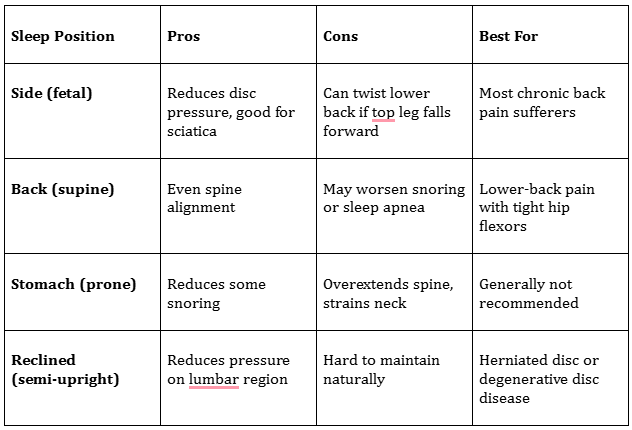
Comparing Sleep Positions for Back Health
How to Sleep Better Tonight
Choose a medium-firm mattress that supports natural spinal curves
Use a pillow between knees (side) or under knees (back)
Try a heating pad 20 minutes before bed to relax muscles
Stretch your hamstrings and hip flexors before lying down
Keep your bedroom cool (60–68°F) for deep sleep stages
Avoid long naps, they fragment nighttime sleep
Build a wind-down ritual: dim lights, slow breathing, no screens
Better Sleep Starts with Support
How you position your body, choose your bedding, and transition into rest can determine whether your spine decompresses or stays under stress overnight. Focus on small refinements: a mattress that supports without sagging, a pillow that keeps your neck neutral, and a sleep posture that preserves natural spinal curves.
Try placing a thin cushion beneath your knees if you sleep on your back, or between your thighs if you rest on your side; both adjustments reduce pressure on the lower spine. Combine this with a cool, dark bedroom and consistent pre-bed routines, and your body gains the best chance to heal while you sleep.
Supportive Strength Through Personalized Pilates
For those with recurring tension, guided movement can accelerate healing. Absolute Pilates offers personalized Pilates programs that strengthen the core, stabilize the spine, and improve posture, which is essential for people with back pain seeking deeper, more restorative sleep.
Their instructors design routines that enhance spinal alignment and relieve tight muscles, allowing the body to settle more comfortably at night. Over time, the result is a stronger foundation and fewer pain-driven awakenings.
Chiropractic Care for Injury-Related Back Pain
If your back pain has persisted despite rest and self-care, it may be time to consult a chiropractor. Chiropractic treatment focuses on restoring spinal alignment, relieving pressure on nerves, and promoting natural healing through precise, noninvasive adjustments.
For individuals whose discomfort began after an auto accident, it’s especially important to seek out a car accident chiropractor. These specialists understand the unique mechanics of collision-related injuries, such as whiplash, herniated discs, and spinal strain, and can tailor treatment to address both immediate pain and long-term recovery needs.
Quick-Action Morning Routine
Sit on the edge of the bed for 60 seconds before standing, let the spine “wake up.”
Roll your shoulders backward to reset posture.
Do 10 gentle cat-cow motions on hands and knees.
Drink a glass of water to rehydrate spinal discs.
Walk for five minutes to stimulate circulation before long sitting periods.
Frequently Asked Questions
Q: What’s the best mattress type for back pain?
A: Typically, medium-firm mattresses balance support and comfort. Memory foam or hybrid options help maintain spinal alignment by distributing pressure evenly.
Q: Can stretching before bed really make a difference?
A: Absolutely. It helps relax the muscles around the spine, lowers tension, and signals your nervous system that it’s time to wind down.
Q: Should I use heat or ice at night?
A: Use heat before bed to relax tight muscles; reserve ice for acute inflammation earlier in the day.
Q: How long does it take to improve sleep after changing habits?
A: Many notice improvements in 1–2 weeks, though consistent posture and movement habits yield the best results over a month or more.
A Resource for Restorative Sleep & Back Health
For evidence-based ways to improve rest without relying solely on treatment, the National Sleep Foundation offers excellent guidance on optimizing your sleep environment. This site offers in-depth research on mattress firmness, pillow support, and sleep posture recommendations. Their insights can help bridge the gap between pain management and genuine recovery. enabling you to build a sleep setup that works with your spine, not against it.
Conclusion
Chronic back pain doesn’t have to dictate your nights. With the right combination of movement, posture awareness, and supportive routines, you can reclaim restorative rest. Align your body, calm your nerves, and treat sleep as active recovery — not a passive hope. Small nightly adjustments, practiced consistently, can transform both your nights and your days.